🌾 The Relationship Between Subak and Tri Hita Karana
Subak is not merely a traditional irrigation system. It is a social, cultural, agricultural, and spiritual institution that reflects the philosophy of Tri Hita Karana. Tri Hita Karana consists of three main relationships: Parahyangan (harmony between humans and God), Pawongan (harmony among people), and Palemahan (harmony between humans and nature).
🛕 1. Parahyangan — Harmony Between Humans and God
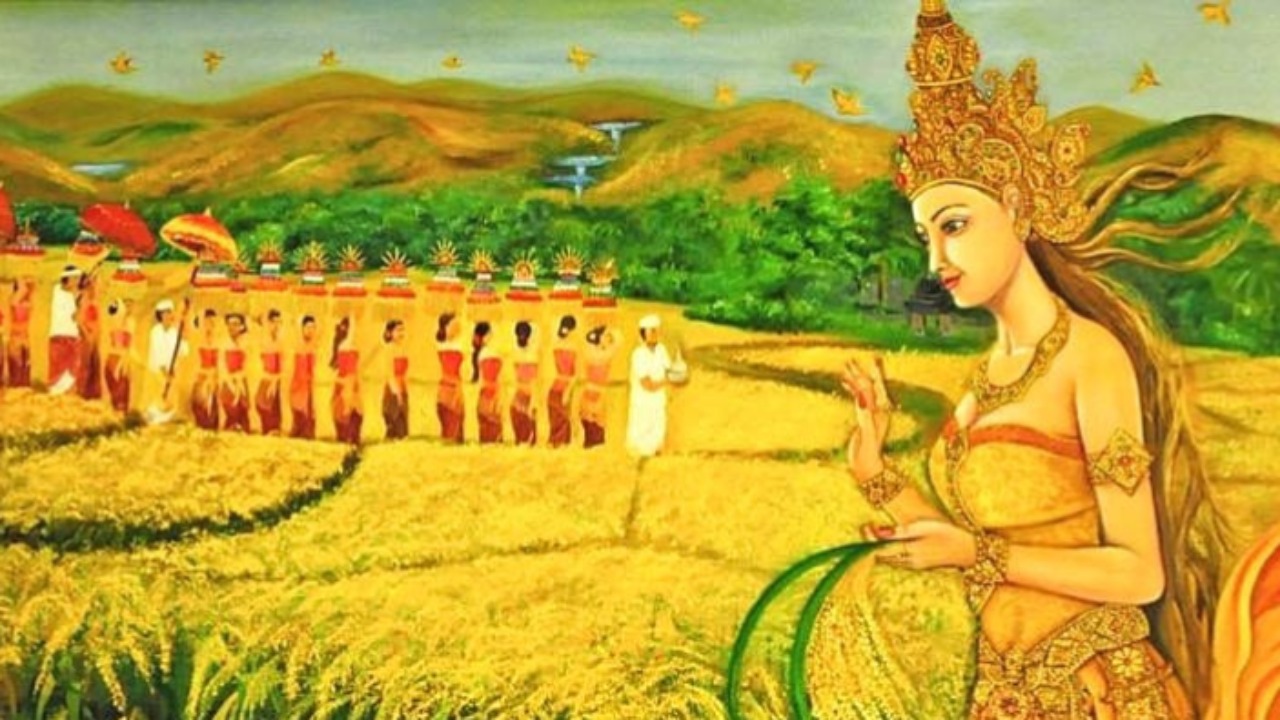
The Parahyangan aspect can be seen through various religious rituals performed throughout the rice-growing cycle. These rituals express gratitude, prayers for protection, and respect for God and the forces of nature that support agriculture.
The process from planting to harvesting rice includes several stages:
- Nuasen — A ritual to ask for blessings and determine an appropriate time to begin agricultural activities.
- Ngendagin — A ritual associated with beginning the preparation of the rice field and asking for safety and smoothness.
- Ngawiwit — The initial ritual marking the beginning of the rice-growing process.
- Memule/Nandur — A ritual connected with planting rice and praying for healthy growth.
- Neduhin — A ritual performed during the growth period to ask for protection and the well-being of the crops.
- Biu Kukung — A ritual conducted during a particular stage of the agricultural cycle as part of the spiritual relationship between farmers, crops, and nature.
- Ngasemin — A ritual performed during the rice-growing process as an expression of gratitude and a prayer for the crops' safety.
- Nyangket/Mesabe — A ritual associated with harvesting rice and expressing gratitude for the harvest.
- Mantenin — A ritual to honor the harvested rice and express gratitude for its fertility and abundance.
- Nganyarin — A ritual involving the offering of newly harvested rice as an expression of gratitude.
- Ngerainin — A closing ritual that expresses gratitude and marks the completion of the agricultural cycle.
These rituals demonstrate that farming in the Subak system is not merely an economic activity, but also a spiritual practice. Each stage reflects the farmers' respect for God and their belief in maintaining harmony throughout the agricultural cycle.
🤝 2. Pawongan — Harmony Among People
The Pawongan aspect is reflected in the strong culture of gotong royong, or mutual cooperation, within Subak communities.
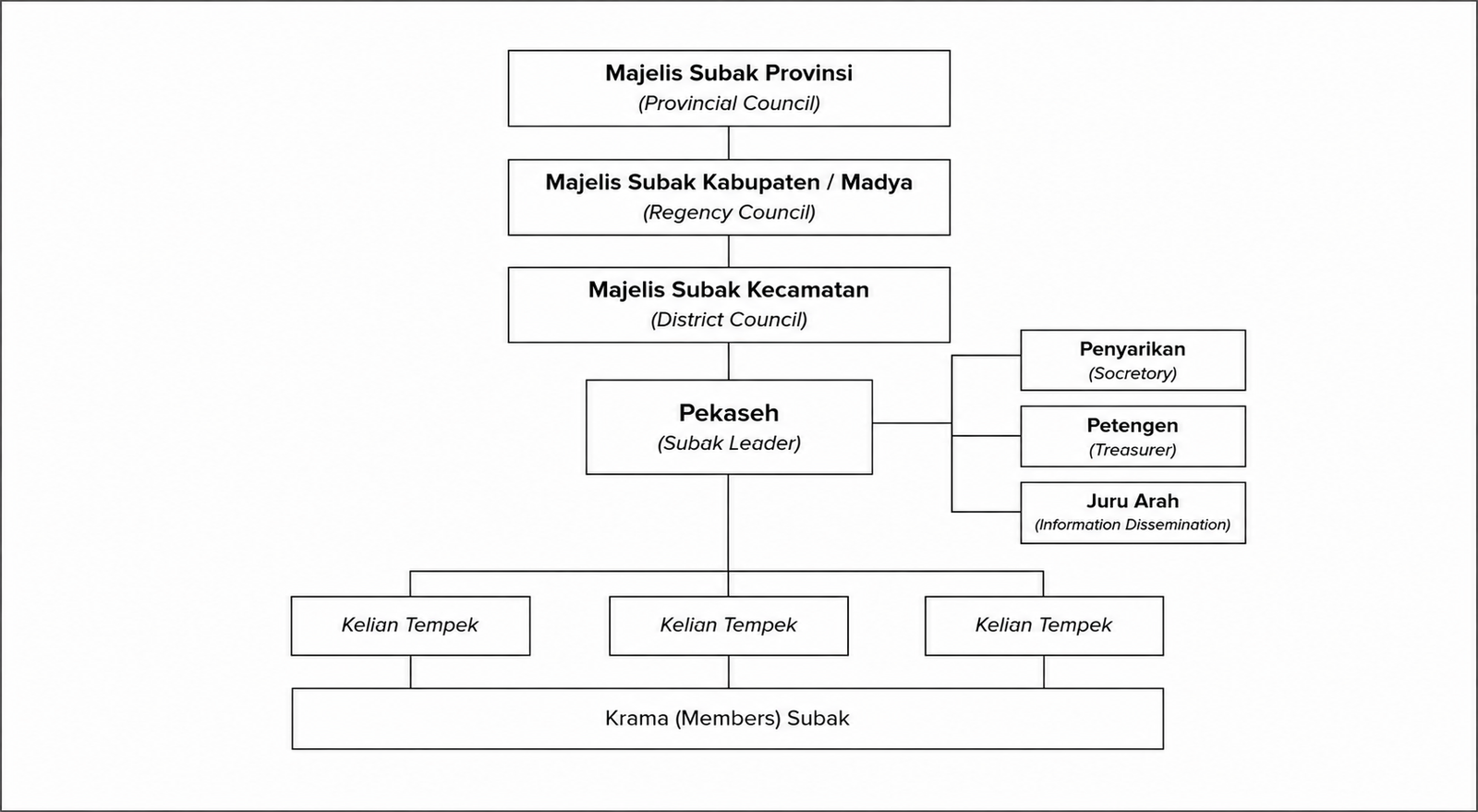
Farmers do not work individually. They cooperate in managing irrigation, maintaining water channels, carrying out agricultural activities, solving problems, and making decisions that affect the entire community.
This cooperation builds solidarity, responsibility, equality, and a sense of community. Through meetings and collective decision-making, Subak encourages farmers to prioritize shared interests rather than individual interests.
Therefore, Subak is not only a system that connects farmers with their fields, but also a system that strengthens social relationships and community unity.
🌱 3. Palemahan — Harmony Between Humans and Nature
The Palemahan aspect is reflected in the way Subak manages natural resources while maintaining environmental balance.
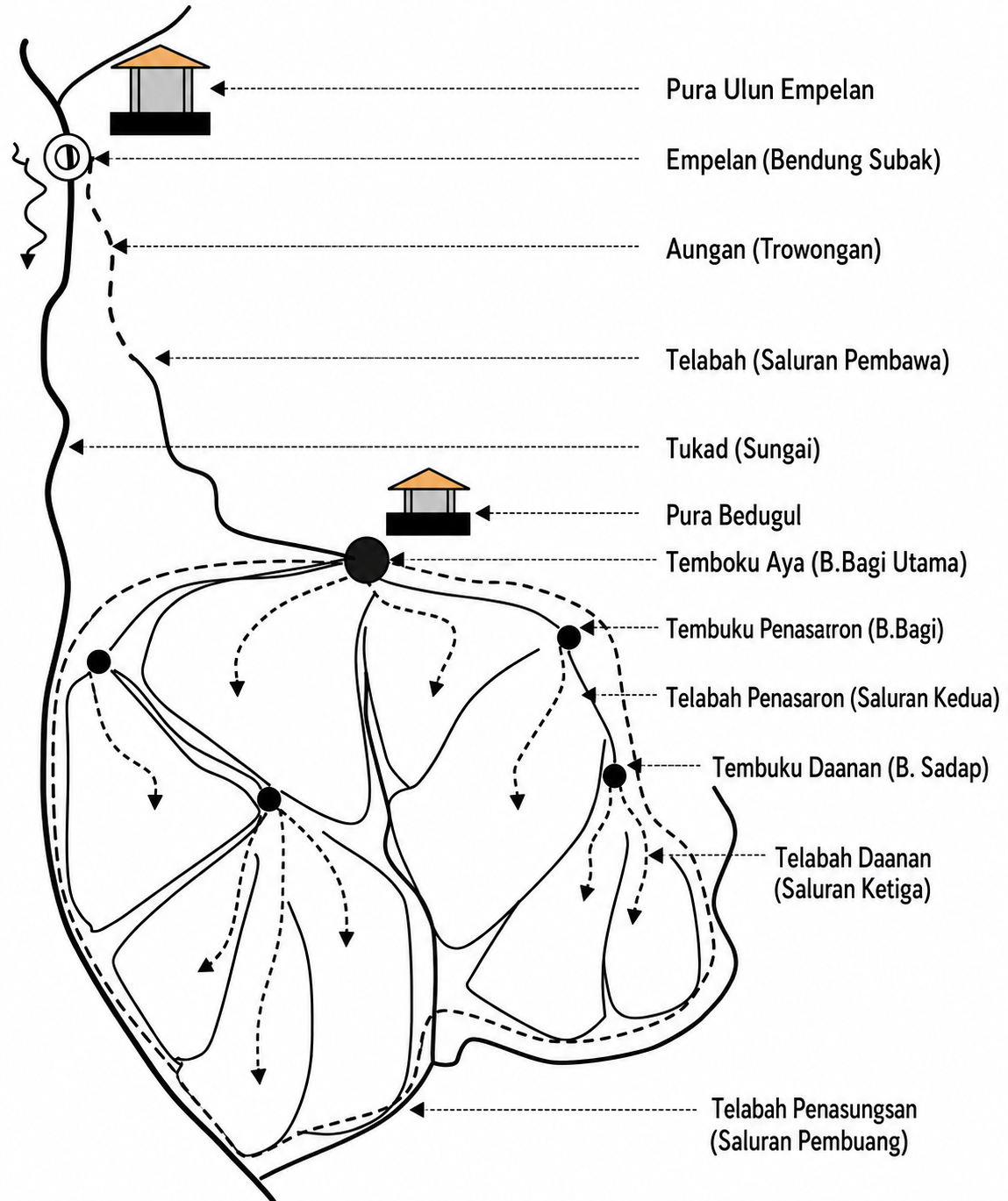
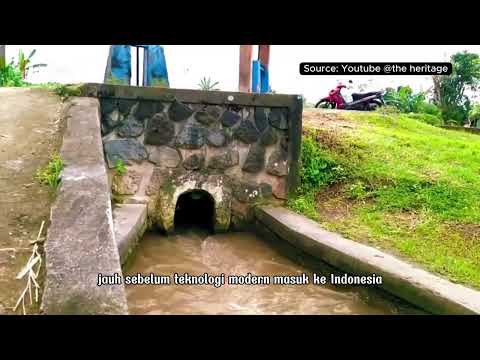
Subak manages water through a shared irrigation network, where the distribution of water is coordinated according to the needs of farmers and the availability of water. This demonstrates that nature is not simply a resource to be exploited, but something that must be respected and protected.
Subak should therefore not be viewed as equivalent to a deep well or technological innovation that extracts water without considering the surrounding environment. While technology can provide solutions to agricultural problems, it should not destroy the natural systems that sustain agriculture.
Instead, innovation should work together with local wisdom. Modern technology can support Subak as long as it respects water availability, ecosystems, agricultural land, and the balance of nature.
This makes Subak an important example of sustainable environmental management, where human needs and environmental preservation can exist together.